





- Approximate height: 45 - 75cm (18 - 30 inches)
- Recommended water depth over crown of the plant: 5 - 20cm (2 - 8 inches)
- Flowering time: Late June to July
- Flower colour: White
- Supplied either as loose tubers or in a solid 9cm pot - for best results we recommend potting on using a 2 litre pot
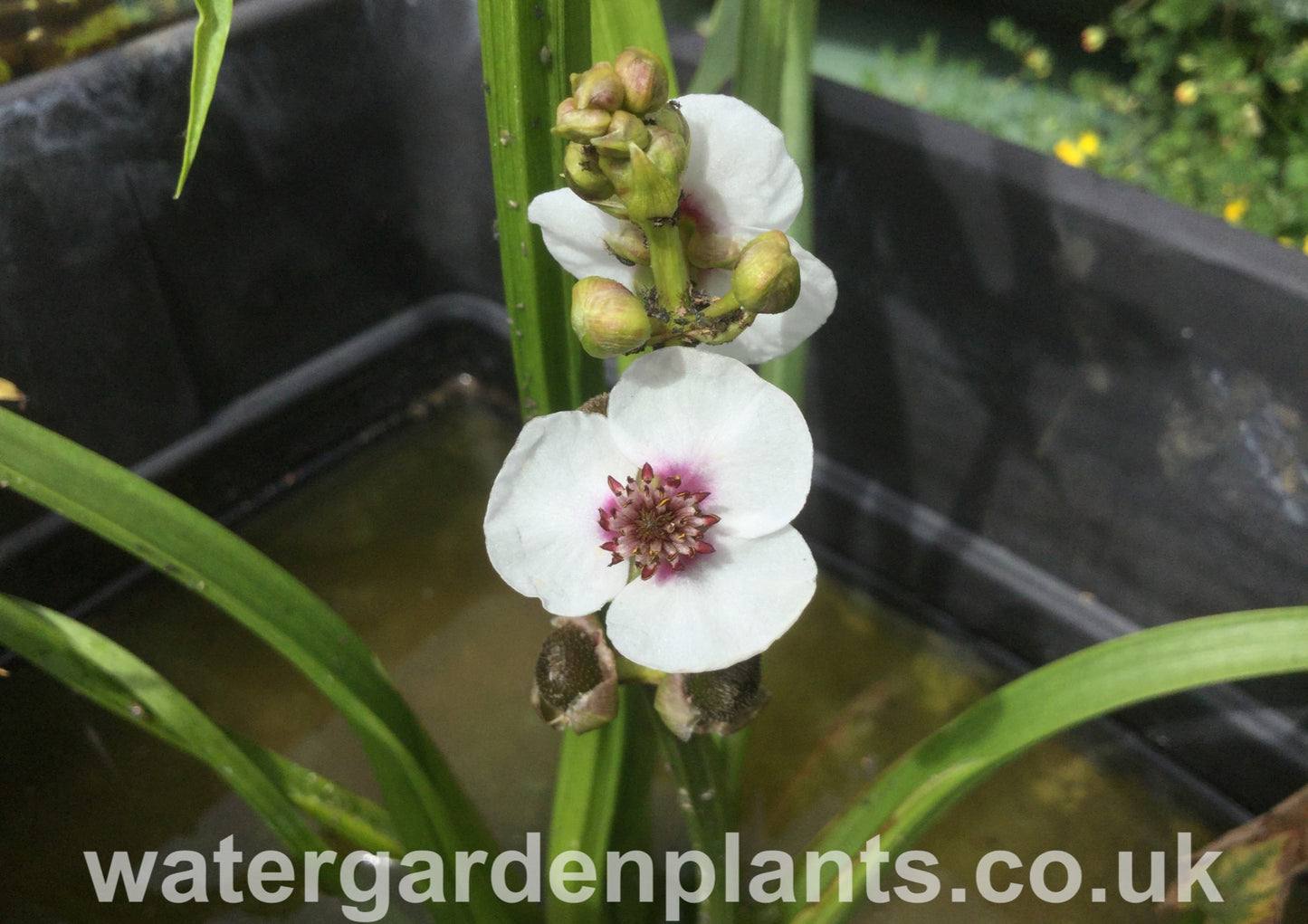
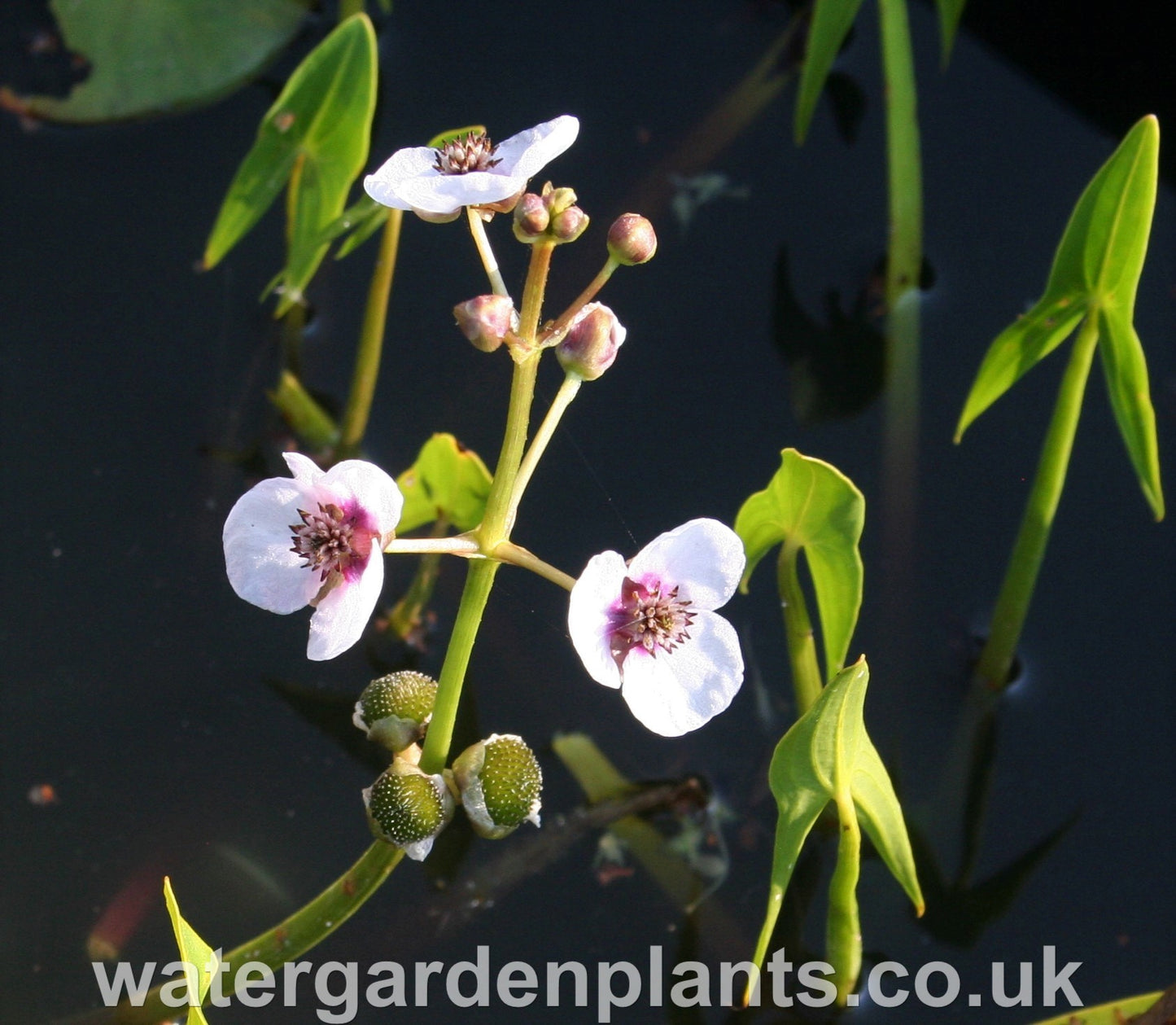
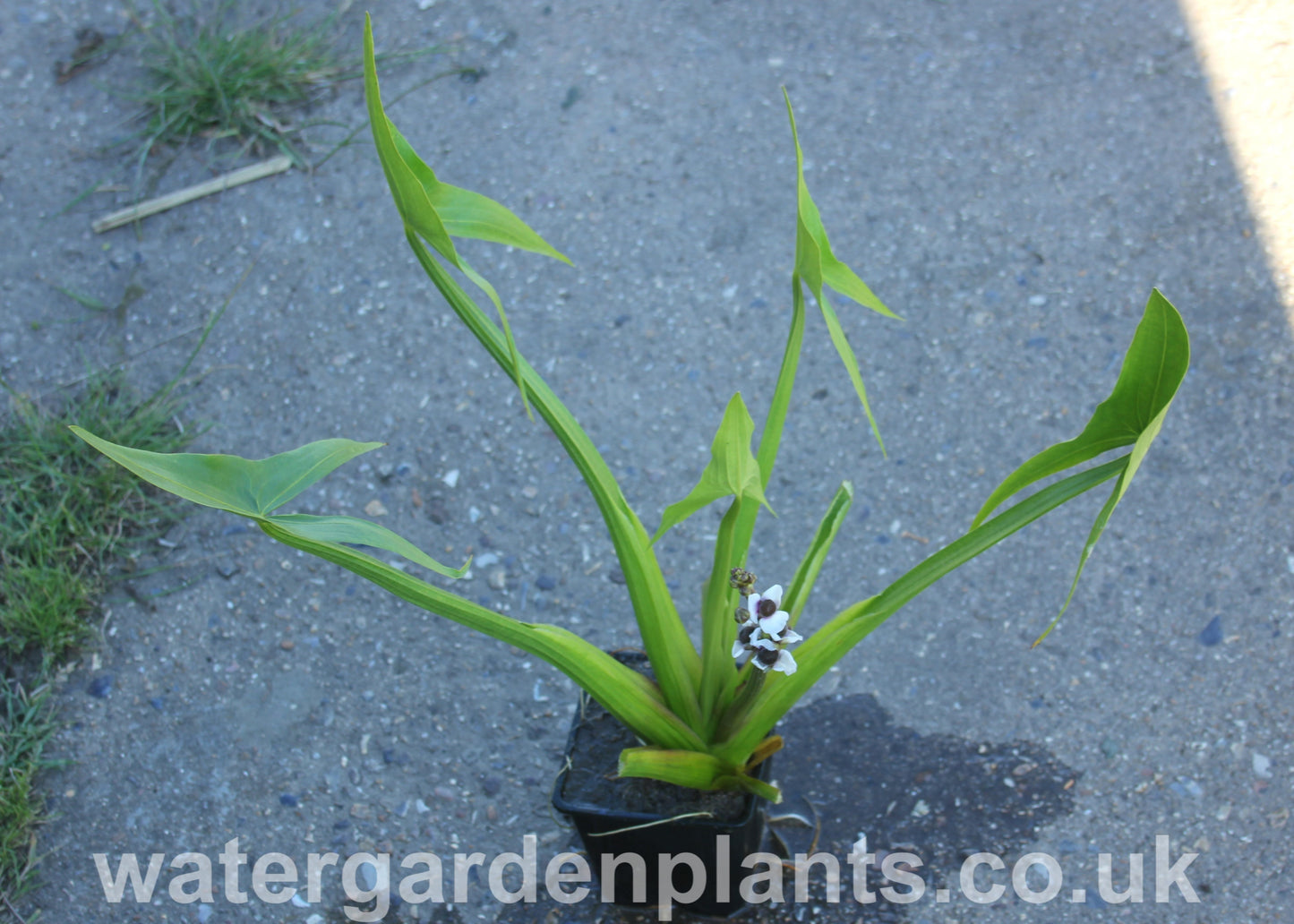
Sagittaria sagittifolia is an impressive native British plant, with characteristic bright-green, arrow-shaped leaves and white flowers with a dark pinkish centre in summer. Each year it grows from a small underground tuber (the "potato"), appearing above the soil as a green spike in early May and growing quickly to flower in July. After flowering, the plant dies back, while underground it produces new tubers for the following year. Occasionally, one or two tubers may escape from the pot and appear elsewhere in the pond the next spring. The plant overwinters as these small, round tubers, with a growing spike but without leaves or roots, from autumn until the following spring (see picture).
It is easy to grow, has a very striking, statuesque appearance, and is also on the RHS’ Plants for Pollinators list. Its only drawback is that the outer leaves start to yellow slightly while the flowers are still out; once flowering is finished, the leaves die back completely, and the plant will not provide any further display until the following spring.
Because it overwinters as a tuber, it is not usually available in pots early in the year. Early in the season, it can be purchased as loose tubers, or later in pots (generally from June onwards). If planting loose tubers, position them with the growing spike pointing upwards and cover with about an inch of soil.
If designing a planting scheme, we recommend approximately 2 - 3 Sagittaria sagittifolia plants per square foot of ground, or 1 plant per linear foot of pond edge. Read more here on how to pot and care for your plant.